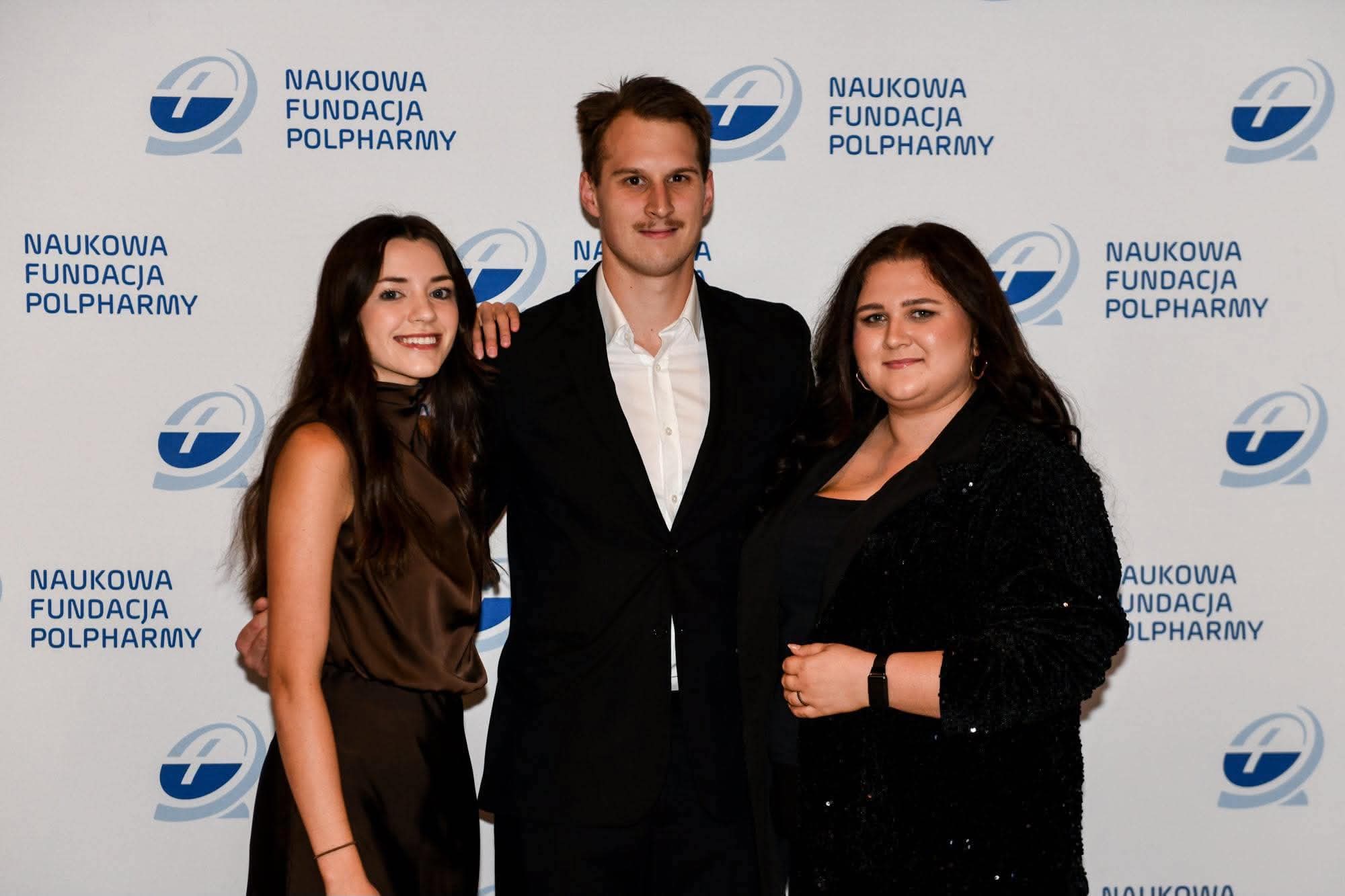
Reflections inspired by the Jubilee Gala of the Medical University of Lublin, 21 November 2025.
The Interpreter’s Task: More Than Just Words
At first glance, interpreting seems simple: listen, understand, and repeat the message in another language. But simultaneous interpreting requires doing all three at the same time, with only a two-to-three-second delay. The interpreter must understand the speaker’s intention, tone, and emotion, not just the vocabulary. Every sentence becomes a puzzle solved in real time.
Interpreters at academic and medical events, such as the MU Lublin Jubilee Gala, must often navigate:
- Complex terminology
- Long technical sentences
- Discipline-specific abbreviations and acronyms
- Cultural references
- Formal protocol and ceremonial language
This means being excellent in both languages is not enough. One must also be prepared for specialised content ranging from medical achievements to academic reforms and institutional history.
At the Jubilee Gala (21 November)
- Ceremonial speeches included academic titles, medical terminology, and historical references—a challenging combination for interpreters.
- Multiple international guests required real-time interpretation for inclusivity and protocol.
- The interpreters’ work ensured that the 75-year history of the Medical University of Lublin was accessible to everyone in the hall.
Equipment: The Invisible Partner
Modern conference interpreting relies heavily on technology. At the Gala, as at any major academic event, interpreters work with:
- Soundproof booths
- High-fidelity microphones
- Noise-cancelling headsets
- Receiver systems for the audience
When the equipment works perfectly, the interpreter becomes almost invisible—an ideal outcome. But even minor technical issues can turn the job into a high-pressure crisis. A crackling microphone, delayed audio feed, or poor acoustics can make comprehension nearly impossible. In simultaneous interpreting, every fraction of a second counts.
Why Speakers Make the Interpreter’s Job Hard
It is a truth known to all conference interpreters: even the most experienced professionals struggle when speakers unintentionally sabotage the process. Common difficulties include:
1. Speaking too fast
Some speakers accelerate when excited, emotional, or pressed for time. Interpreters then must condense content while trying to preserve meaning.
2. Poor articulation or accent issues
Mumbling, unclear diction, or heavy accents can severely hinder comprehension.
3. Reading written speeches at high speed
A speaker reading from paper tends to use unnatural pacing and dense phrasing, making it harder to follow.
4. Using humour, idioms, or wordplay
These rarely have direct equivalents across languages. Interpreters must decide instantly whether to explain, adapt, or omit.
5. Diverting from the script
Improvised additions, personal anecdotes, and last-second changes are common at gala events—and difficult to predict.
6. Using technical terminology without context
This is especially significant at medical celebrations. Even a skilled interpreter may need to rely on prior preparation or on-the-spot inference.
At the MU Lublin Jubilee Gala, the combination of ceremonial speeches, academic terminology, historical references, and expressions of gratitude created a rich but demanding environment for any interpreter.
The Mental Effort Behind the Scenes
Simultaneous interpreting is often compared to performing music, solving puzzles, and doing live broadcasting—simultaneously. Cognitive research shows that interpreters use working memory, long-term memory, multitasking skills, and rapid decision-making continuously during a session.
To prevent fatigue, interpreters typically work in pairs, switching every 20–30 minutes. Even short intervals can feel like marathons when they involve complex medical terms or long, protocol-heavy speeches like those heard during the MU Lublin celebration.
Why the Interpreter Matters
An anniversary gala such as the 75-year celebration of the Medical University of Lublin brings together international guests, partner institutions, and dignitaries. Without professional interpreters:
- Non-Polish-speaking guests would miss crucial parts of the ceremony
- The university’s achievements could not be communicated effectively
- Collaboration and international relations would suffer
Interpreters enable institutions to present themselves confidently on the global stage. Their work ensures that the message is conveyed accurately, respectfully, and in real time.
A Profession Built on Excellence
Being a simultaneous conference interpreter requires not only bilingual proficiency but near-native command of both languages, superb listening skills, cultural sensitivity, and emotional resilience. Events like the Jubilee Gala are a reminder that the quality of interpretation shapes audience experience, international visibility, and even institutional reputation.
Behind the dignified speeches, ceremonial music, and celebratory atmosphere, the interpreter’s work remains largely unseen—but absolutely vital.
What the Photos Reveal: A Glimpse Into the Booth
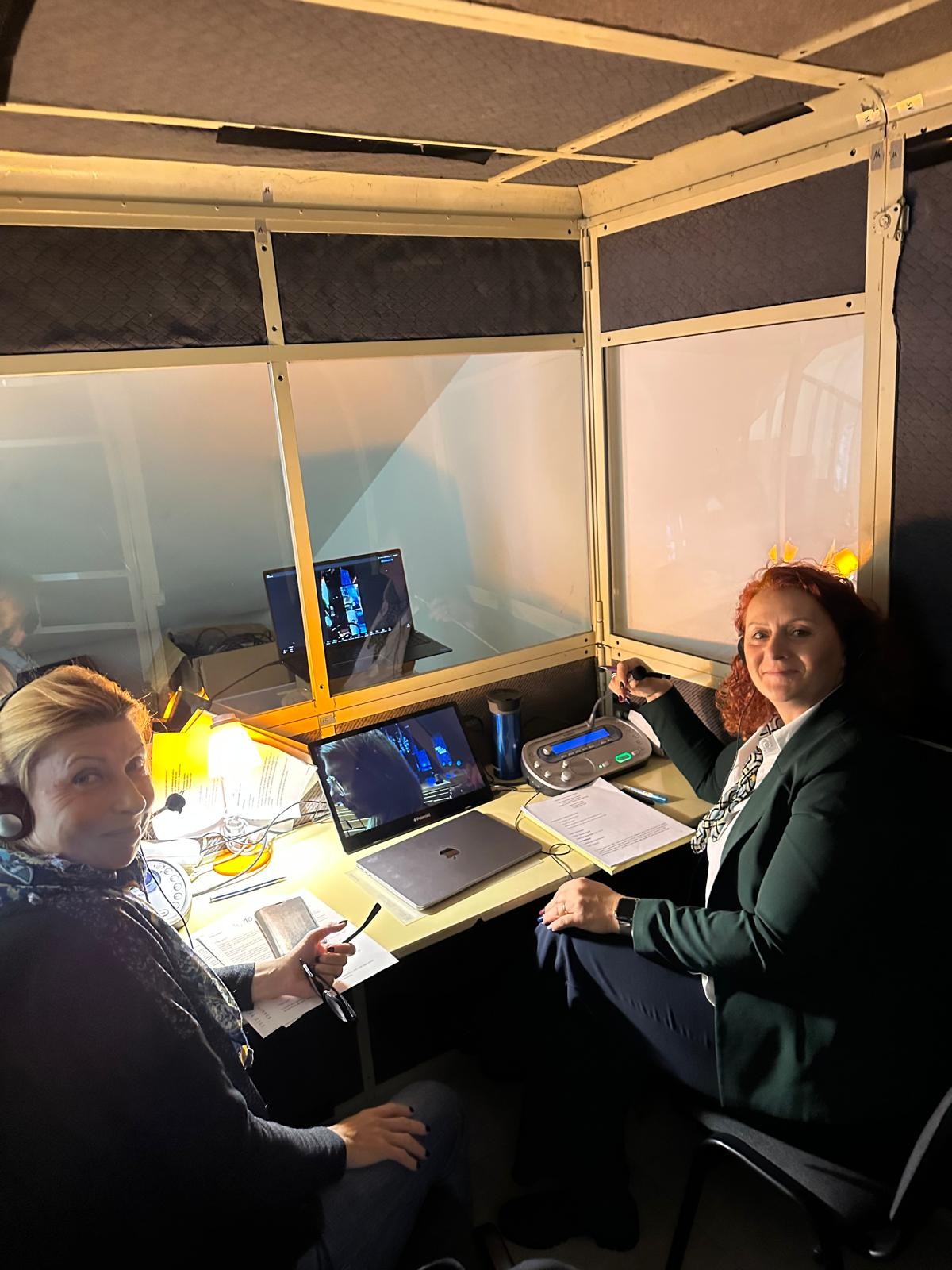
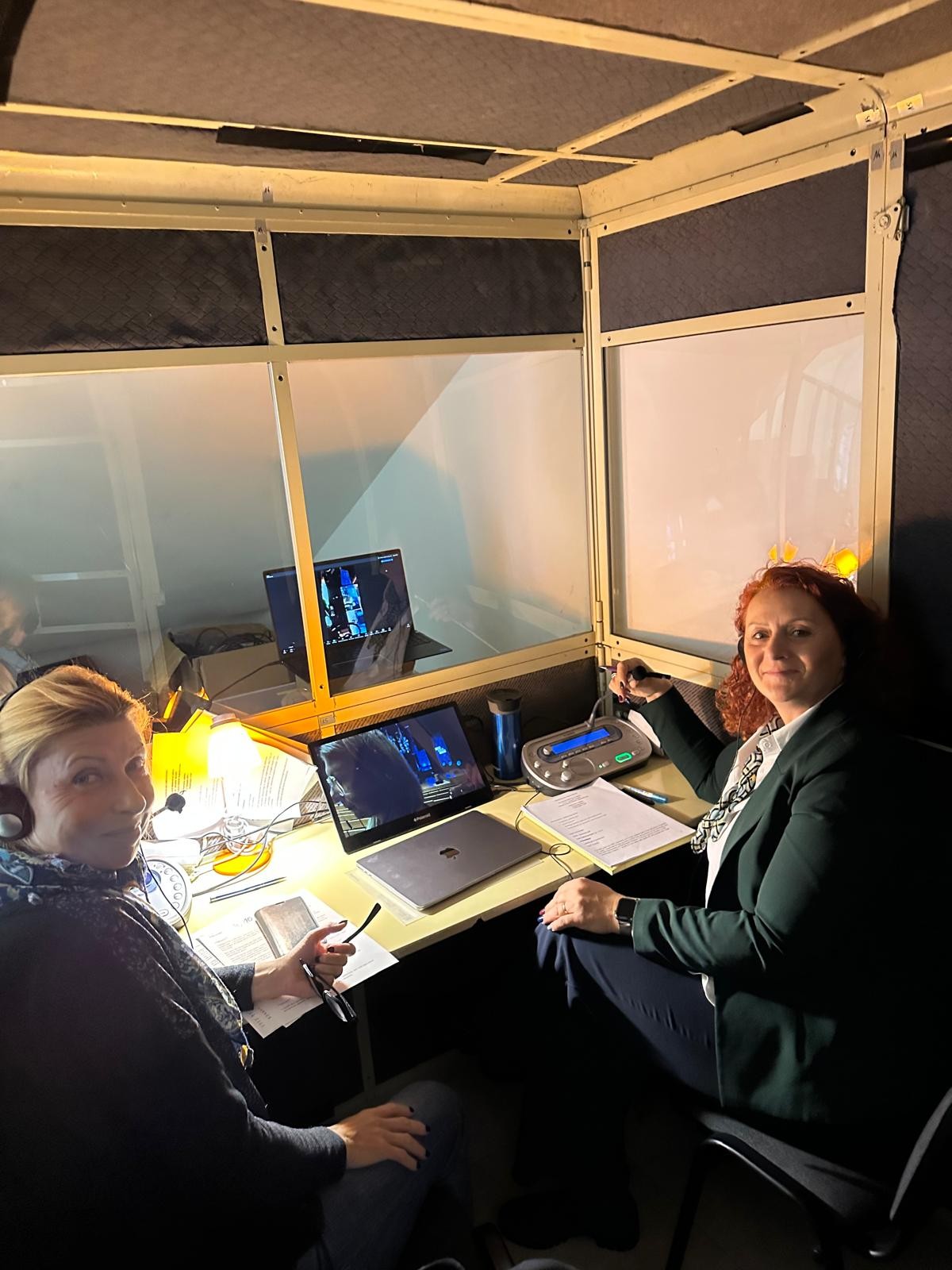
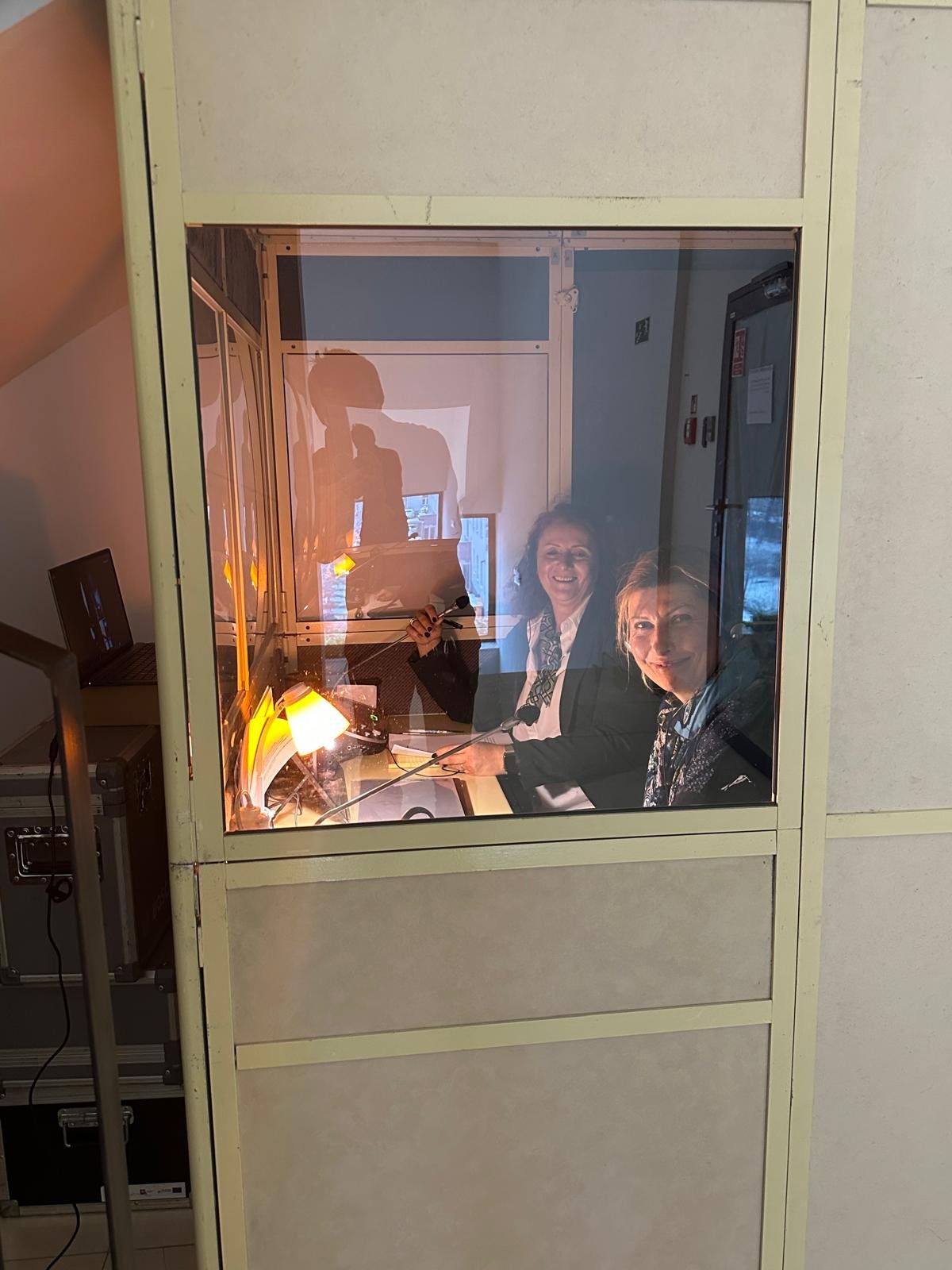
The images from the gala offer a rare look into the interpreters’ environment. They show a portable simultaneous interpreting booth, the standard for events hosted in venues without built-in infrastructure. The booth is:
- sound-insulated to prevent external noise from entering
- compact, often warmer than the rest of the room
- equipped with transparent panels to allow a view of the hall
- furnished with two chairs and minimal desk space
Inside, two interpreters work side by side—also standard practice. They switch every 20–30 minutes, because the mental load is too heavy for one person alone.
On the desk are the essential tools of the trade:
- an interpreting console with volume, channels, and microphone controls
- headsets delivering the speaker’s voice
- a desk lamp, because booths are typically dim
- laptops and display monitors with a video feed of the stage
- printed scripts, notes, terminology lists, and event programmes
From these details alone, one can see the professionalism required: interpreters prepare in advance, organise their materials, and rely on technology to keep up with speakers they cannot always see directly.
Interpreter’s Booth – Fun Facts & Quick Insights
Did You Know?
- Simultaneous interpreters listen and speak at the same time, with only a 2–3 second delay—one of the most complex mental tasks measured by cognitive science.
- Professional interpreters switch every 20–30 minutes to avoid mental fatigue.
- The booth used at university galas is soundproof and often kept at a cooler temperature—interpreters heat up quickly from the mental effort!
- On average, interpreters process 120–160 words per minute. Some speakers go beyond 200.
- Interpreters hear everything through headphones—even pages turning or someone tapping their pen near the microphone.
- Before events like university jubilees, interpreters often prepare by reading programmes, biographies, academic abstracts, and even scanning the campus website for terminology.
Quotes from the Booth
“Please, slow down—my brain can only sprint for so long!”
—Every simultaneous interpreter at least once in their life
“Interpreting is like dancing: the speaker leads, the interpreter follows.”
“A good interpreter is invisible. A great interpreter makes the speaker sound brilliant.”
“When the microphone crackles, we pray. When the speaker improvises, we improvise too.”
Written by Katarzyna Karska (Departmet of Foreign Languages, UMLub)
(the pictures present: picture 1: from the left, Katarzyna Karska and Zofia Charis; picture 2: Zofia Charis and Katarzyna Karska – both from the Department of Foreign Languages of the Medical Univeristy of Lublin)